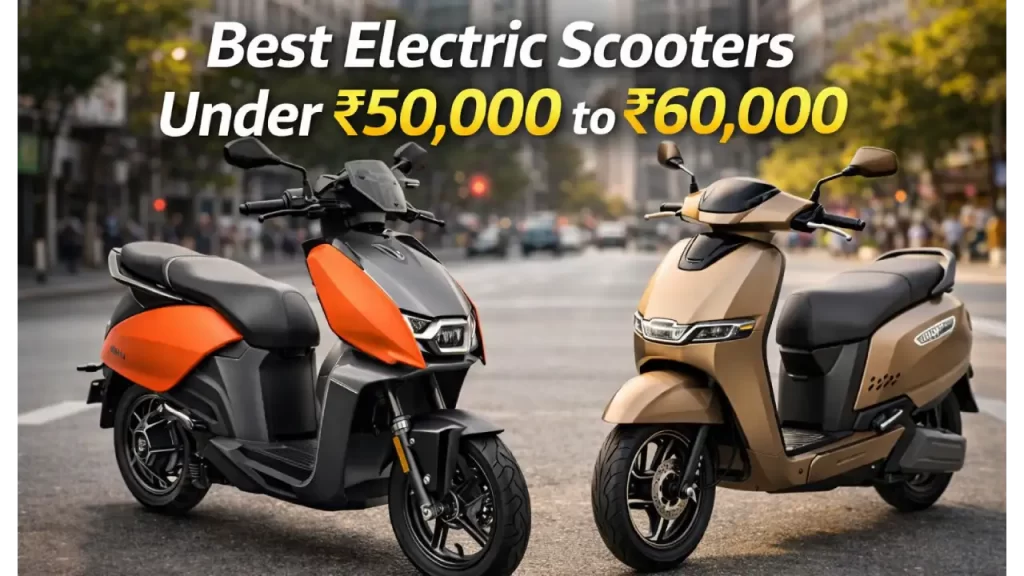

Looking for an electric scooter under ₹60,000? Explore the best budget EV scooters in India, real-world range, pros, cons, and whether they’re worth buying in 2026.
The Reality of Daily Commuting in India
If you’re someone who rides 5 to 15 km daily to office, college, or nearby markets, you’ve probably felt the pinch of petrol prices crossing ₹100 per litre in many cities. In places like Bhubaneswar, Cuttack, or even smaller towns across Odisha, short-distance commuting is the most common use case. You don’t need a high-speed scooter for that.
This is exactly where budget electric scooters in the ₹50,000 to ₹60,000 range come into the picture. But here’s the truth most YouTube videos won’t tell you upfront — these are not replacements for petrol scooters like Activa or Jupiter. They serve a very specific purpose.
Let me break it down in a practical, no-nonsense way.
What You Actually Get in This Price Range
Design, Build Quality, and Basics
In this budget, most scooters are lightweight, simple, and designed for low-speed usage. Popular options include:
- Hero Electric Flash LX
- Avon E Lite
- Ampere Reo Elite
- Ujaas eGo
The build quality is decent but basic. You’ll notice more plastic parts, simpler switchgear, and minimal styling. These scooters are not meant to impress; they are built to move you economically.
Battery and Range Reality
Most scooters in this segment use:
- Lead-acid batteries (cheaper but heavier)
- Some newer variants offer lithium-ion (better but slightly expensive)
Claimed range: 60–80 km
Real-world range: 40–60 km
In real Indian conditions with traffic, speed fluctuations, and occasional overloading, expect closer to the lower side.
Charging Practicality
Charging is simple:
- Plug into a normal home socket
- Charging time: 4 to 8 hours
If you live in an apartment without easy parking access to a plug point, this could be a challenge.
Motor Performance
These are low-speed scooters (25 km/h max)
- No license required
- No registration needed
But here’s the catch — performance is very limited. You cannot expect quick acceleration or highway capability.
Real-World Riding Experience
Office Commute
For someone commuting 5–10 km daily:
- Smooth and silent ride
- No fuel cost stress
- Easy to ride in traffic
But if your route includes flyovers or heavy traffic with faster vehicles, you may feel underpowered.
College and Student Use
This is honestly the best use case:
- No license hassle
- Low running cost
- Lightweight and easy to handle
Many parents prefer these scooters for teenagers.
Small Town and Local Market Usage
In Tier 2 and Tier 3 cities, these scooters make a lot of sense:
- Short distances
- Lower traffic speeds
- Easy home charging
However, potholes and bad roads can affect ride comfort since suspension is basic.
Price and Value Analysis
Ex-Showroom Pricing (Approx)
- Avon E Lite: ₹45,000 – ₹50,000
- Hero Electric Flash LX: ₹55,000 – ₹60,000
- Ampere Reo Elite: ₹50,000 – ₹58,000
Prices may vary depending on state subsidies (which have reduced significantly compared to earlier years).
Value Perspective
Let’s be honest — you’re not buying performance here.
You’re buying:
- Savings on petrol
- Low maintenance
- Simple commuting
If you compare with premium EVs like Ola S1 or Ather 450X, those start above ₹1 lakh and offer completely different performance.
Who Should Buy These Scooters
These scooters are ideal if:
- Your daily ride is under 15 km
- You don’t want license/registration hassle
- You need a second vehicle for local errands
- You are a student or senior citizen
Who Should Avoid Them
Avoid these if:
- You need speed above 40 km/h
- Your commute is long (20+ km daily)
- You ride on highways or flyovers
- You expect petrol scooter-like performance
In that case, consider higher-end EVs from Ola Electric, Ather Energy, or TVS iQube.
Common Misconceptions About Budget Electric Scooters
“Range Will Be 80 km Always”
No. Real-world range depends on:
- Rider weight
- Road conditions
- Battery health
“Battery Will Die in 1 Year”
Not true. Even lead-acid batteries typically last:
- 1.5 to 2 years (with proper care)
Lithium-ion batteries last much longer.
“Charging Is Complicated”
It’s actually easier than fueling petrol — just plug in overnight.
Ownership and Running Cost Reality
Electricity Cost vs Petrol
Let’s do simple math:
- Full charge cost: ₹8–₹12
- Range per charge: ~50 km
That’s roughly ₹0.20 per km
Compare that to petrol scooters:
- ₹2–₹3 per km
Huge difference over time.
Maintenance
- Very low compared to petrol scooters
- No engine oil, clutch, or gearbox
Battery Replacement Cost
- Lead-acid: ₹10,000–₹15,000
- Lithium-ion: ₹20,000–₹30,000
This is something buyers often ignore.
Service Network
This is critical. Brands like:
- Hero Electric
- Ampere (Greaves Electric Mobility)
have relatively better presence than smaller brands.
Buyer Experience and Market Reality
The budget EV segment is growing, but slowly.
Why?
Because many buyers still expect:
- High speed
- Long range
- Petrol-like flexibility
Which these scooters cannot deliver.
However, for last-mile mobility, they are extremely practical.
We are also seeing increased competition from brands like:
- Ola Electric
- Ather Energy
- TVS Motor
But they operate in a completely different price segment.
Final Verdict: Are They Worth It?
If you understand their limitations, these scooters are absolutely worth it.
But if you expect them to replace a petrol scooter completely, you will be disappointed.
Think of them as:
“Electric cycles with scooter convenience”
That mindset makes all the difference.
FAQs
Q1: Which is the best electric scooter under ₹60,000 in India?
Hero Electric Flash LX and Ampere Reo Elite are among the most reliable options.
Q2: Do I need a license for these scooters?
No, since they are low-speed (below 25 km/h).
Q3: What is the real range of budget electric scooters?
Typically 40–60 km in real-world conditions.
Q4: Are these scooters good for daily office commute?
Yes, but only for short distances under 10–15 km.
Q5: How long does the battery last?
Lead-acid: 1.5–2 years, Lithium-ion: 3–5 years.