
The race for India’s cheapest electric scooter just got fiercer. Get all details on new launches like the Bajaj Chetak C2501, Hero Vida VX2 Go, and Ola S1 Z starting from just ₹59,999.
The race to own India’s most affordable electric scooter is witnessing a seismic shift. A wave of strategic launches and aggressive pricing from major automakers is dramatically lowering the entry point for electric mobility, putting it within reach of millions of new buyers.
This intense competition is transforming the sub-₹1 lakh segment into the industry’s fiercest battleground. With sales surging, the landscape for budget-conscious commuters has fundamentally changed overnight.
What’s New: The New Contenders Redefining “Affordable”
The definition of a cheap electric scooter is being rewritten. The Bajaj Chetak C2501, launched at an introductory price of ₹91,430, directly challenges the popular TVS iQube with a 113 km range, signaling Bajaj’s serious intent to capture volume.
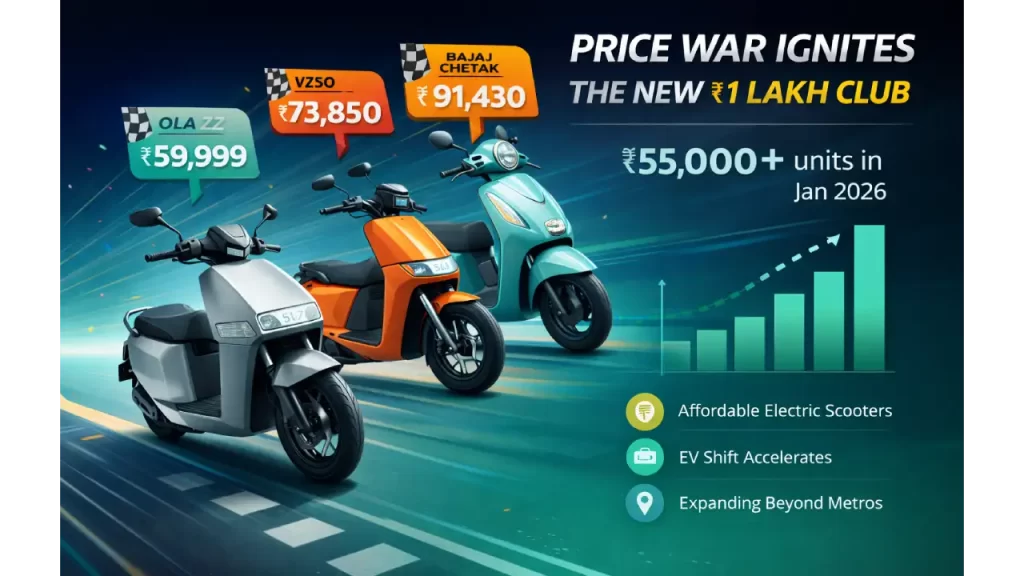
However, the real story is the intense competition beneath that price. The Hero Vida VX2 Go starts at ₹73,850, while Ather Energy has innovated with a Battery-as-a-Service model to offer its Ather Rizta S from ₹75,999 upfront. Currently, the Ola S1 Z holds a notable position with a starting price of ₹59,999. Other key players include the Ampere Magnus Grand at ₹89,999 and Yulu’s unique rental-focused Wynn at ₹55,555.
Why It Matters: Mainstream Adoption Hits the Accelerator
This rapid price compression is critical for India’s EV transition. By bringing upfront costs in line with—or even below—many 110cc petrol scooters, it removes the single largest barrier to adoption for the average Indian family.
The competition is driving unprecedented sales. Early 2026 data shows over 55,000 units sold in just the first fortnight of January. As government subsidies phase out, the market is maturing, with competition now centered on brand trust, product reliability, and the total ownership experience.
Expected Market Impact: A Surge Beyond Metro Cities
Analysts predict this affordability wave will turbocharge EV penetration in Tier 2 and Tier 3 cities. The availability of reliable options from trusted household names like Hero, Bajaj, and TVS reduces perceived risk for first-time buyers outside urban centers.
The disruption is far from over. The market is anticipating the launch of the Bajaj Affordable Electric Scooter (codenamed, expected around ₹80,000) and Ather’s EL-01 (from ₹90,000), ensuring the value-for-money war will continue throughout 2026.
Buyer Perspective: Smart Choices in a Crowded Market
For consumers, this is a golden era of choice. The focus has decisively shifted from premium performance scooters to practical, no-fuss daily commuters.
Experts caution buyers to look beyond the headline price. Critical evaluation points include:
- Real-World Range: Expect 15-25% less than the certified (IDC) range in stop-start city traffic.
- Total Cost of Ownership: Calculate expenses like mandatory battery subscriptions and compare the vastly lower per-kilometer charging cost against petrol.
- Service Network: A widespread and reliable service infrastructure, like Bajaj’s 3,800+ touchpoints, is essential for hassle-free ownership.
The Road Ahead
The democratization of electric two-wheelers in India is now irreversible. As affordable, dependable models from the country’s most trusted brands become the norm, the electric scooter is poised to become the default choice for India’s massive commuter base. In this high-stakes price war, the ultimate winner is the Indian consumer.
Sources & Verification: This report is based on official manufacturer announcements, pricing data from automotive portals like BikeDekho and BikeWale, and sales analysis from industry reports for January 2026. All prices are ex-showroom and subject to change.