
When electric scooters started flooding Indian roads, they promised freedom—from petrol prices, engine noise, and rising maintenance bills. In 2024–2025, thousands of riders made the switch, hoping their daily commute would finally become cheaper and stress-free.
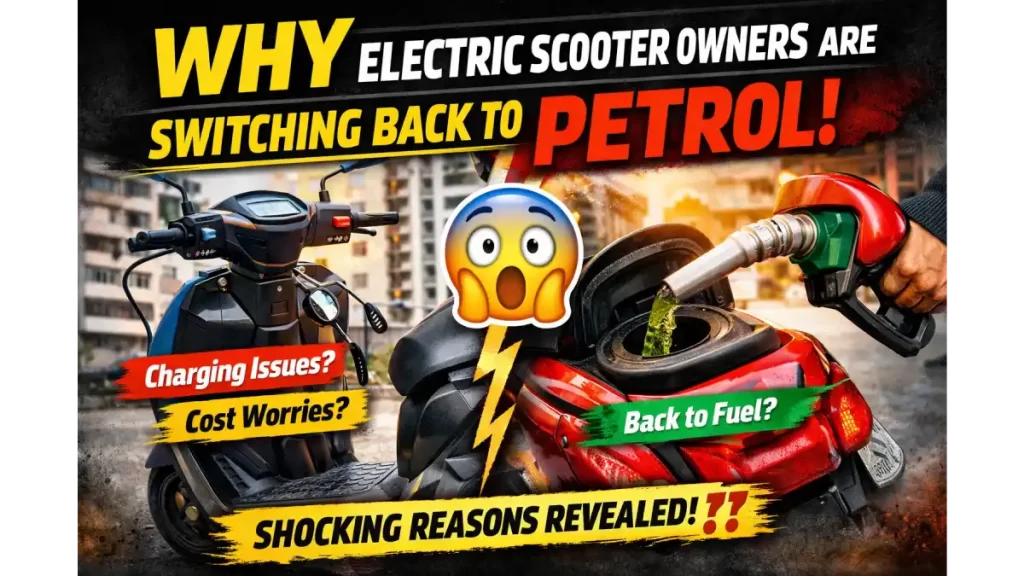
But by early 2026, a surprising trend began surfacing. A growing number of electric scooter owners—especially in Tier-2 and Tier-3 cities—are quietly returning to petrol scooters. Not because EVs failed completely, but because real-life usage exposed gaps no brochure ever mentioned.
Apartment charging issues, inconsistent service support, battery anxiety during emergencies, and resale worries are pushing everyday users to rethink their decision. Office commuters, family riders, even delivery executives—many feel the EV transition came a bit too fast for Indian conditions.
So what exactly went wrong? And is petrol really making a comeback? The reasons are more layered than they appear.
Key Reasons Behind the Shift Back to Petrol
- Charging Reality vs Expectation
- Home charging sounds simple—until you live in a rented flat
- Extension cables, parking disputes, and power cuts ruin convenience
- Range Anxiety in Daily Life
- Claimed 120 km often drops to 70–80 km in traffic
- Detours, errands, or emergency rides create constant mental stress
- Battery Replacement Fear
- Battery cost after 3–4 years can reach ₹40,000–₹60,000
- Many owners didn’t calculate this upfront
- Service & Downtime Issues
- Limited EV service centers in smaller cities
- Waiting days—or weeks—for spare parts
👉 In contrast, petrol scooters still offer instant refueling and predictable ownership.
User Experience: What Owners Are Saying
Many early EV adopters admit the scooter itself wasn’t bad—but the ecosystem wasn’t ready.
- Office commuters:
“If I forget to charge once, the next day becomes stressful.” - Family riders:
“Parents prefer petrol—no range thinking, no charging planning.” - Senior citizens:
“Petrol feels familiar. EV screens and apps feel complicated.”
Even popular brands like Ola Electric, Ather Energy, and TVS deliver solid products—but expectations vs ground reality still clash for many users.
Cost Factor: EV vs Petrol Isn’t Always Simple
On paper, EVs win:
- Low running cost
- Minimal servicing
But in reality:
- Battery depreciation hurts resale value
- Petrol scooters from Hero MotoCorp and Bajaj Auto still fetch better second-hand prices
- Fuel cost feels predictable compared to sudden battery expenses
For budget-conscious buyers, peace of mind often outweighs monthly savings.
Is This the End of Electric Scooters?
Absolutely not.
This shift isn’t rejection—it’s course correction. Electric scooters work brilliantly for:
- Riders with fixed daily routes
- Independent houses with easy charging
- Short city commutes under 25 km
But for mixed-use families and uncertain travel patterns, petrol still feels safer—for now.
The EV ecosystem is improving fast. Better charging infra, cheaper batteries, and stronger service networks will likely pull many users back again.
If you’re planning to buy a scooter, don’t follow trends blindly. Think about your charging access, daily distance, and family needs before choosing electric or petrol.
Visit official brand websites, talk to real owners, and always take a long test ride—not just a showroom spin.
Forward this article to friends debating EV vs petrol or save it before making your next two-wheeler decision.