
Yamaha Aerox E first ride review covering real-world range, performance, charging, price expectations and whether it makes sense for Indian riders in 2026.
Real World Introduction: Why Scooters Like Aerox E Matter Now
If you ride daily in India, you already know the story. Petrol prices keep climbing, traffic is getting worse, and short city commutes are becoming longer and more frustrating. For many riders in cities like Kolkata, Bengaluru, or Pune, a typical day means 10–25 km of stop-and-go traffic, rough patches, sudden potholes, and very little open road.
That’s exactly where electric scooters have started making sense. But here’s the problem I’ve noticed after riding multiple EVs — most of them feel practical, not exciting. They solve the cost problem, but not the riding experience.
That’s why the idea of a sporty electric scooter from Yamaha Motor Company is interesting. The Aerox has always been about performance and aggressive styling. Now with the Yamaha Aerox E (expected electric version), the big question is simple:
Can it combine EV efficiency with Yamaha-style fun?
After a first ride experience, here’s what stood out.
Design, Build Quality and First Impressions
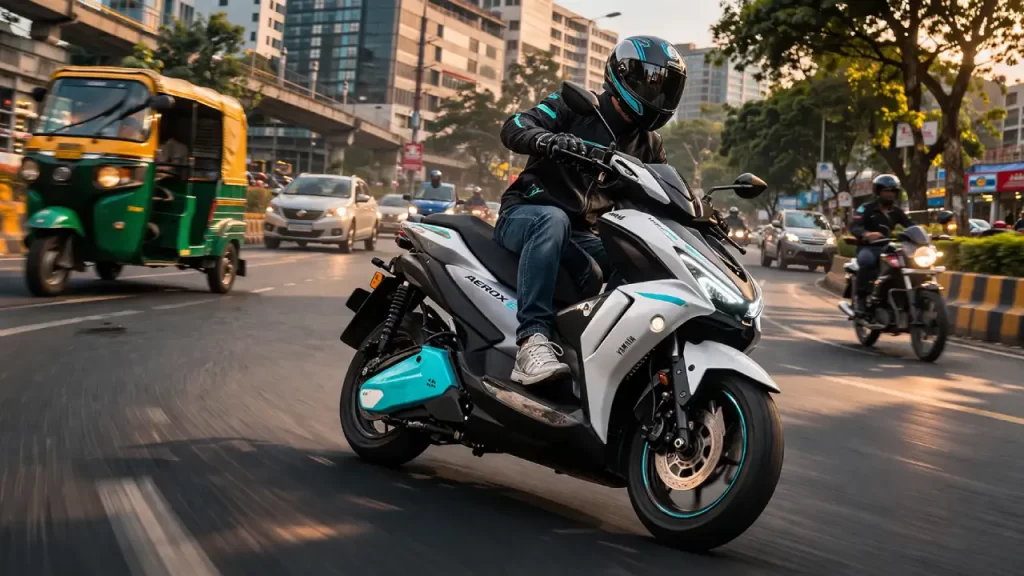
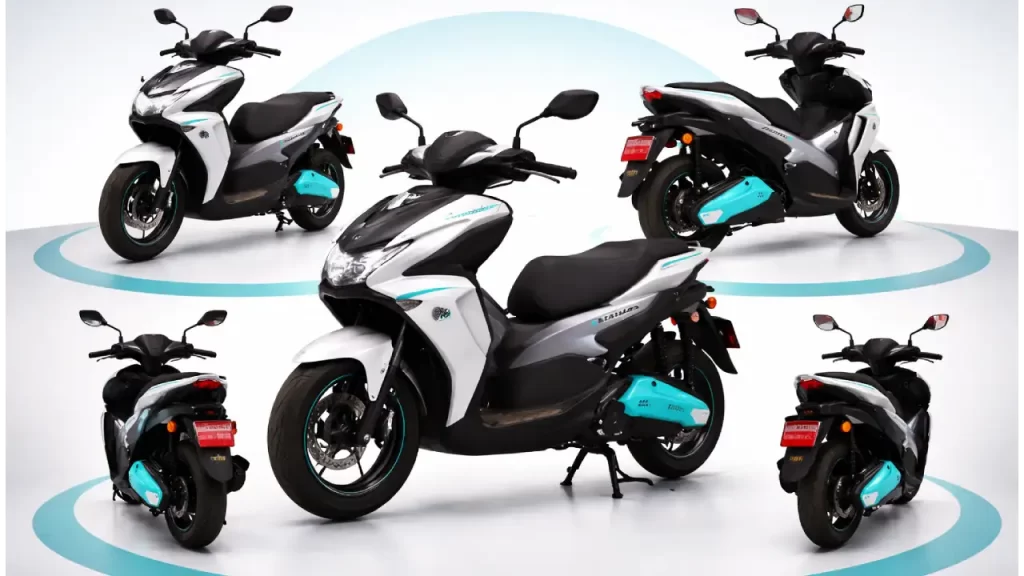
The first thing you notice is that Yamaha hasn’t diluted the Aerox identity. It still looks sharp, aggressive, and very different from the typical family-focused EV scooters.
The design carries forward that maxi-scooter stance — wide body, sharp LED lighting, and a slightly higher seat height. Compared to something like the Ola S1 Pro or Ather 450X, the Aerox E feels more like a performance machine than a commuter.
Build quality is where Yamaha really shines. The panels feel tight, switches feel premium, and nothing feels flimsy. This is something many Indian EV buyers worry about — long-term durability — and Yamaha seems to have addressed that from the start.
Battery, Range and Charging Practicality
While official specs may vary depending on the final India launch version, the Aerox E is expected to use a lithium-ion battery pack designed for urban performance rather than extreme range.
From the first ride impressions and early information, the claimed range could be in the ballpark of 100–120 km. But in real Indian riding conditions — traffic, acceleration bursts, occasional pillion — you should realistically expect around 75–95 km.
That’s actually enough for most riders.
Think about it. If your daily commute is 20–30 km, you’re charging once every 2–3 days. That’s manageable, especially if you have home charging.
Charging time is expected to be around 4–6 hours on a standard charger. Fast charging capability is something Yamaha might introduce later, but even without it, overnight charging works fine for most users.
Motor Performance: This Is Where It Feels Different
The biggest highlight of the Aerox E is how it accelerates.
Unlike many EV scooters that focus on smoothness, this one feels tuned for excitement. The throttle response is sharp, and initial pickup is strong — especially useful in traffic gaps.
It doesn’t feel like a “family scooter.” It feels closer to a sporty petrol scooter experience, something fans of the petrol Aerox will immediately recognize.
Compared to competitors:
The TVS iQube ST feels more comfort-focused
The Bajaj Chetak Electric feels premium but relaxed
The Ather 450X is the closest rival in terms of performance
But the Aerox E has a slightly more aggressive character, especially in how it delivers power.
Real World Riding: Traffic, Roads and Daily Use
In city traffic, the Aerox E feels quick and responsive. Filtering through gaps is easy thanks to instant torque, and the scooter feels stable even at slightly higher speeds.
On rough roads, the suspension is slightly on the stiffer side — typical of sporty setups. That means better handling but slightly less comfort on bad roads.
For college students or office commuters who enjoy riding, this setup actually feels engaging.
For family usage with a pillion and groceries, it may feel a bit less practical compared to wider, flatter scooters.
Seat height and riding posture are also more performance-oriented. Taller riders will love it. Shorter riders might need a short adjustment period.
Price Expectations and Value Analysis
Yamaha hasn’t officially confirmed India pricing yet, but based on positioning, the Aerox E is expected to sit in the premium segment.
That likely means a price range somewhere between ₹1.40 lakh to ₹1.70 lakh (ex-showroom estimate).
At that price, it competes directly with:
The Ola S1 Pro
The Ather 450X
Higher variants of TVS iQube ST
The key difference is positioning. While others balance practicality and tech, Yamaha is clearly targeting riders who want performance and brand trust.
Who Should Buy This Scooter — And Who Should Avoid It
You should consider the Aerox E if you want a sporty electric scooter that feels fun to ride, not just practical. It makes sense if your daily commute is moderate, you have access to home charging, and you value performance and build quality over maximum storage or comfort.
You should probably avoid it if your priority is family usage, heavy pillion riding, or maximum range per charge. In that case, something like the Bajaj Chetak Electric or TVS iQube ST may suit you better.
Common Misconceptions About Electric Scooters
One thing I keep hearing from riders is concern about battery life. Most modern EV batteries are designed to last several years, typically backed by warranties around 3–5 years.
Range anxiety is another big fear. But in reality, most urban riders rarely exceed 40 km per day.
Charging is often seen as a hassle, but if you treat it like charging your phone overnight, it becomes routine very quickly.
Ownership Costs: The Real Savings
This is where EVs shine.
If you compare petrol vs electricity, the savings are significant. A petrol scooter might cost ₹2–3 per km to run, while an electric scooter typically costs less than ₹0.50 per km.
Maintenance is also lower. No engine oil, fewer moving parts, and less wear and tear.
However, service network matters. Yamaha’s strong reputation in India could play a big role here, especially compared to newer EV startups.
Buyer Experience and Market Impact
The Aerox E represents something important. It shows that EVs in India are moving beyond just “cheap commuting solutions” and entering the “enthusiast” space.
Brands like Ola Electric and Ather Energy have already pushed performance. Yamaha entering this space raises the bar further.
It also signals that traditional manufacturers are taking EVs seriously, which is good for long-term trust and ecosystem development.
Final Thoughts After First Ride
After riding the Aerox E, one thing is clear — this scooter is not trying to please everyone.
It’s built for riders who enjoy riding.
It may not be the most practical EV, and it may not offer the longest range, but it brings something many electric scooters lack — character.
And honestly, that might be exactly what the Indian EV market needs right now.
FAQs
What is the expected range of Yamaha Aerox E?
Around 100–120 km claimed, with 75–95 km realistic range.
Is Yamaha Aerox E good for daily commute?
Yes, especially for urban riders with 20–30 km daily usage.
How does it compare with Ather 450X?
Both are performance-focused, but Aerox E feels more aggressive in design and riding stance.
What is the expected price of Aerox Electric in India?
Estimated between ₹1.40 lakh to ₹1.70 lakh (ex-showroom).
Is it suitable for family use?
Not ideal. It’s better suited for solo riders or enthusiasts.
Are you excited about a sporty electric scooter like the Aerox E, or do you still prefer practical EVs for daily use? Share your thoughts and riding habits — it helps others make better decisions.