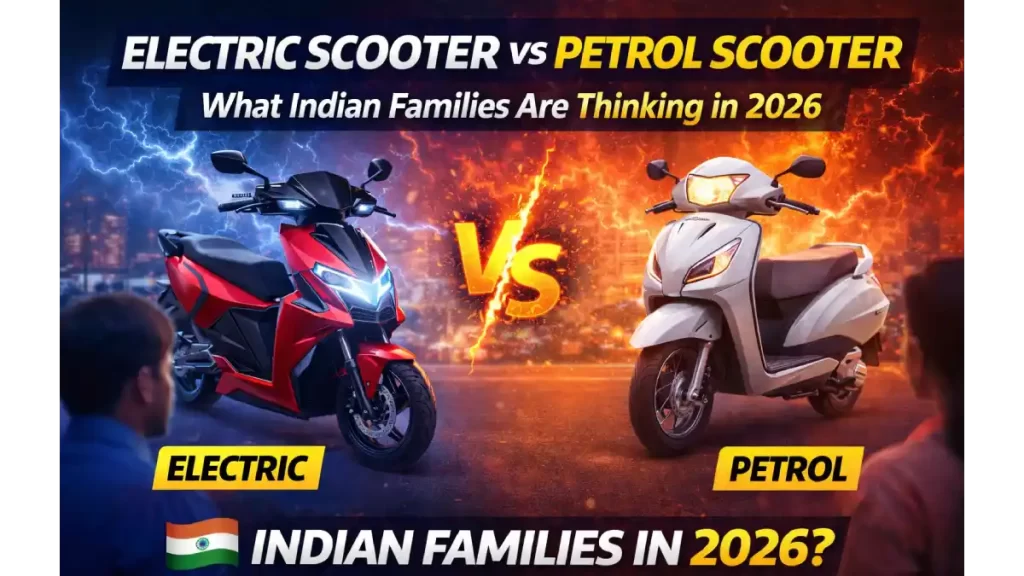

Every morning across India, families make small transport choices that quietly shape their day. From school drop-offs to office commutes, the scooter parked outside the house now reflects changing priorities in 2026.
Morning Choices
At 7 a.m., the lane outside a typical Indian home is already busy. A parent drops a child at school, another heads toward the office, and a neighbor warms up their scooter for the day. In 2026, this daily scene often comes with a quiet question in the background — should the family trust an electric scooter, or stay with petrol?
Across cities and small towns, families are weighing this decision more thoughtfully than ever. The discussion is no longer about trends. It is about routine, reliability, and peace of mind.
Cost Pressure
Fuel prices continue to influence household budgets. As per reports, many families now calculate running costs before anything else. Electric scooters, charged overnight at home, are seen as lighter on monthly expenses. Claimed figures suggest electricity costs can be a fraction of petrol spending over the year.
Petrol scooters, however, come with familiar predictability. Families know what to expect at the pump, even if it costs more. For some households, that certainty still matters.
Daily Distance
Most family rides are short. School runs, market visits, office commutes — often under 40 to 50 km a day. Early indications suggest electric scooters fit this pattern well, especially in urban areas where charging at home is possible.
But for families who travel longer distances on weekends, range becomes a concern. Petrol scooters still offer the comfort of quick refuelling, especially when trips stretch beyond city limits.
Quiet Roads
One noticeable change in neighborhoods using electric scooters is sound. Or the lack of it. Mothers often mention calmer school mornings, with no engine noise near children. Early users say the smooth pickup in traffic feels less stressful during rush hours.
Petrol scooters, on the other hand, provide a familiar road feel. Their engine note and steady cruising speed still inspire confidence during longer rides.
Service Trust
Service networks play a big role in family decisions. According to industry sources, electric scooter service coverage has expanded rapidly, especially in major states. Still, some families remain cautious, especially in smaller towns where trusted mechanics are part of daily life.
Petrol scooters benefit from decades of presence. Spare parts, roadside help, and resale value are known quantities. This long-standing trust continues to influence conservative buyers.
Safety Focus
When children are involved, safety takes priority. Parents observe details others may miss — seat height, braking feel, balance at low speeds. Electric scooters are often appreciated for low centers of gravity and easy handling in traffic.
Petrol scooters, meanwhile, carry a reputation built over years. Their mechanical simplicity reassures families who value proven designs over newer systems.
City Reality
Traffic conditions shape opinions strongly. Electric scooters are widely seen as comfortable in stop-and-go city movement. Instant response at low speeds helps in crowded streets and narrow lanes.
Petrol scooters still perform better when roads open up. For families living on the edges of cities or in rural pockets, this difference remains important.
Charging Life
Charging habits have quietly become part of family routines. Plugging in at night feels natural to many urban households, similar to charging a phone. Claimed figures suggest a full charge costs little compared to daily fuel use.
Yet, range anxiety still exists. Power cuts during monsoon months and limited public chargers keep some families hesitant.
Environmental Thought
Environmental awareness is slowly entering household discussions. Parents speak about cleaner air around schools and quieter neighborhoods. Early indications suggest some families see electric scooters as a step toward responsibility, even if not perfect.
At the same time, concerns about battery life and long-term replacement costs remain part of the conversation, balancing idealism with practicality.
Mixed Decisions
Not all families choose one side completely. Many households now own one electric scooter for daily use and keep a petrol vehicle for longer travel. This mixed approach reflects how personal the decision has become.
Urban families, especially in metro regions, appear more comfortable experimenting with electric mobility. Rural and semi-urban families often prefer to wait and watch.
Observed Shift
What stands out in 2026 is not a clear winner, but a shift in thinking. Families are no longer asking which scooter is “better.” They are asking which fits their life today.
Electric scooters are seen as calm, economical partners for daily routines. Petrol scooters remain symbols of reliability and freedom beyond the city.
Quiet Conclusion
In Indian households, the electric versus petrol debate now happens over dinner tables, not showrooms. It is shaped by school timings, office routes, local roads, and family comfort.
The choice, increasingly, is less about technology and more about trust — trust in routine, trust in reach, and trust in what gets the family home safely at the end of the day.
If you know families who are having similar conversations at home, this perspective may be worth sharing with them.