
When I first searched for a three tyre scooter, I wasn’t planning to buy anything immediately. I honestly just wanted clarity. I kept seeing these scooters on Indian roads—near local markets, outside apartments, around delivery hubs—but every website I opened felt like a sales pitch.
What I really wanted to know was simple:
Is a three tyre scooter actually safer, more practical, and worth considering in India—or is it just marketing hype?
So I stopped reading brochures and started paying attention to real life. I observed riders, spoke with dealers, compared brands like EKOTEJAS and others, and watched how these scooters actually behave on Indian roads.
This article is not here to sell you anything. I’m writing this to help you decide if a three tyre scooter truly fits your daily life in India.
What Is a Three Tyre Scooter (In Simple Terms)
A three tyre scooter is a scooter-style vehicle that runs on three wheels instead of two, usually powered by electricity. That one extra wheel may sound like a small change, but in Indian road conditions, it makes a big difference.
From what I’ve personally seen on the road:
- Balance improves instantly
- Riding at slow speed feels calm
- Sudden braking doesn’t cause panic
- Carrying load doesn’t disturb stability
This isn’t about luxury or style. It’s about control, comfort, and confidence, especially in unpredictable traffic.
Why Three Tyre Scooters Make Sense on Indian Roads
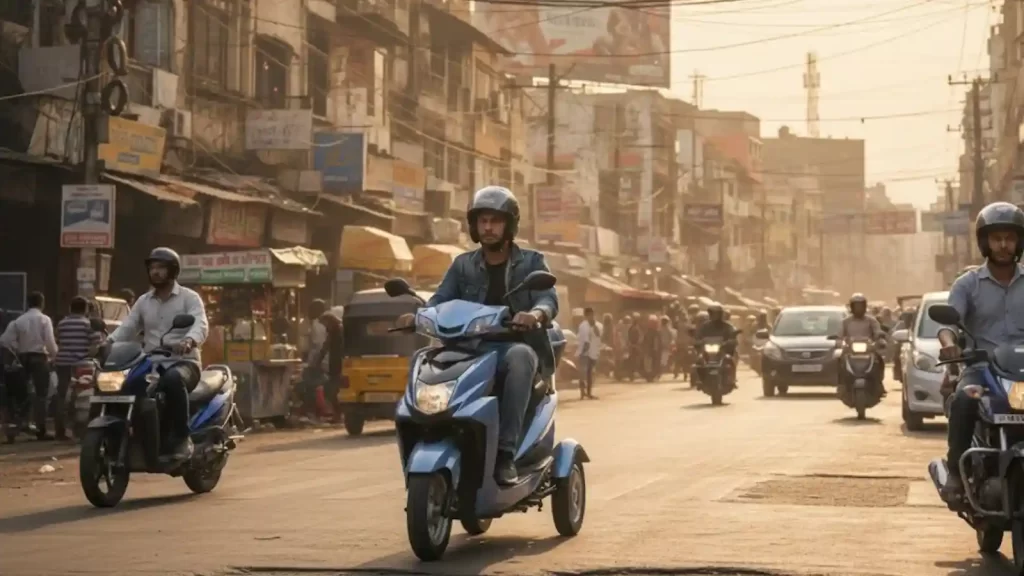
Indian roads don’t behave like showroom floors. Anyone who rides daily already knows this.
We deal with:
- Uneven speed breakers
- Broken patches that appear overnight
- Sudden traffic stops
- Poor lighting in many areas
- Pedestrians and animals crossing randomly
With three tyres, I noticed a clear difference:
- The scooter feels grounded
- Low-speed wobbling disappears
- Stability remains even when carrying goods
This is why I genuinely believe three tyre scooters are not a trend. They’re a response to real Indian road conditions.
Who a Three Tyre Scooter Is Actually For
Many brand pages say “everyone,” but from my experience, that’s not accurate. These scooters work best for specific groups of people.
Senior Citizens
This is one of the safest personal mobility options I’ve seen for elderly riders. There’s no gear stress, throttle control is gentle, and balance is strong even at low speeds. I’ve watched seniors ride comfortably to nearby shops without fear.
Women Riders
Many women value stability more than speed. At traffic signals or in slow-moving traffic, a three tyre scooter feels more predictable and less stressful than a two-wheeler.
Delivery and Last-Mile Workers
Food delivery and courier workers benefit a lot:
- Very low running cost
- Better load handling
- Less physical fatigue
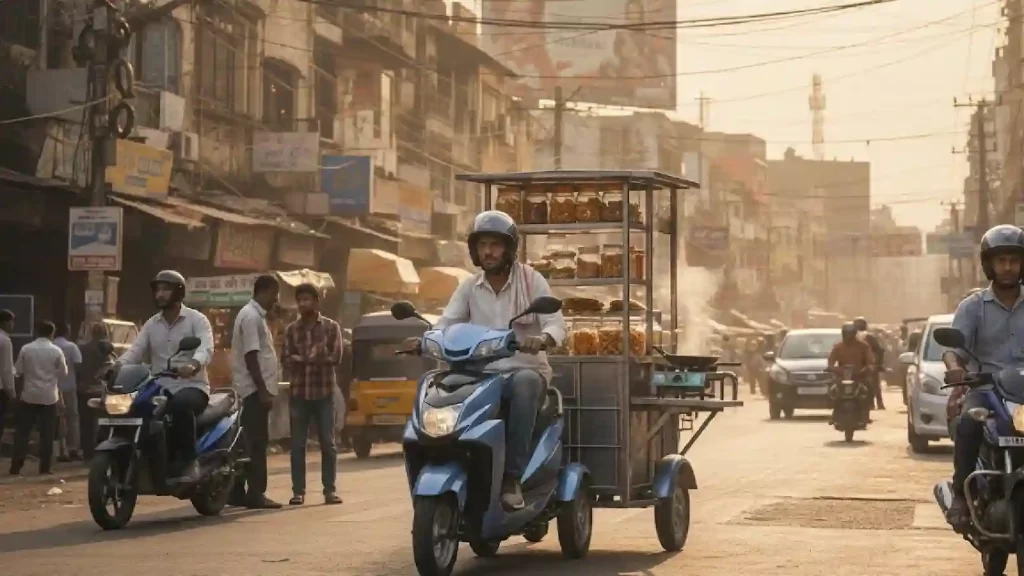
Street Vendors and Micro Businesses
Fruit sellers, food carts, water suppliers—utility-based three tyre scooters reduce physical effort and daily operating cost. This is where these vehicles quietly change livelihoods.
EKOTEJAS and other brands list these use cases—but rarely explain why they matter in real life.
Three Tyre Scooter vs Two-Wheel Electric Scooter
This is the most honest comparison I can give, based on real observation:
- Stability: Three tyre scooter wins
- Safety: Three tyre scooter wins
- Load carrying: Three tyre scooter wins
- Speed & portability: Two-wheel scooter wins
It’s not about which is better overall. It’s about choosing the right fit for your daily needs.
Battery, Range, and Real-World Performance in India
Most three tyre scooters available in India use one of these:
- Lead-acid batteries (lower cost, heavier)
- Lithium-ion batteries (higher cost, better efficiency)
What You Can Expect in Daily Use
Based on what I’ve seen:
- Range: 70–120 km per charge
- Charging time: 4–8 hours
- Top speed: 25–45 km/h
In Indian traffic, reliability and range matter far more than top speed. Very few people actually ride at maximum speed all day.
Cost of Ownership: The Biggest Advantage
This is where three tyre scooters truly shine.
Here’s simple math:
- Electricity cost per km: ₹0.20–₹0.40
- Petrol scooter cost per km: ₹2.5–₹3.5
Maintenance is minimal:
- No engine oil
- Fewer moving parts
- Lower service costs
Over a few years, a regular daily rider can easily save ₹1–2 lakh. For small business owners, that difference really matters.
Service Network Matters More Than Brand Names
This is where I’ve seen many buyers make mistakes.
Before choosing any brand (Mahindra Electric, Kinetic Green & EKOTEJAS), always check:
- Local service availability
- Spare parts access
- Warranty clarity
- Dealer responsiveness
A good scooter without proper service support quickly becomes a problem, no matter how good the features look online.
Common Myths About Three Tyre Scooters
I hear these myths all the time:
❌ “Only for old people”
❌ “Too slow to be useful”
❌ “Not practical for daily life”
From real-world usage, people choose three tyre scooters because they solve problems, not because of looks or trends.
How I’d Choose a Three Tyre Scooter Today
If I were buying one right now, I’d focus on:
- Intended use (personal or commercial)
- Battery type
- Load capacity
- Service network
- Warranty coverage
Model names and marketing claims would come last.
FAQs About Three Tyre Scooters
Is a three tyre scooter safe for elderly riders?
Yes. It’s one of the safest scooter options due to its balance and low-speed stability.
Can a three tyre scooter be used for daily commuting?
Yes, especially for short to medium-distance urban travel.
Are three tyre scooters electric only?
Most modern models in India are electric.
How long does the battery last?
Typically 2–4 years, depending on usage and battery type.
Is registration required in India?
Yes, most models require registration. Rules vary by state.
Final Thoughts
After real observation, comparison, and ground-level research, I’m confident that three tyre scooters are a practical mobility solution for India. They offer safety, cost savings, and real usability—things many people actually need but rarely see explained clearly.
If stability, comfort, and real-world reliability matter to you, this category deserves serious consideration. Take your time, observe real users, and choose what truly fits your daily life—not just what looks good in ads.
👉 Looking for more EV scooter guides?
Visit our Homepage for the latest updates.