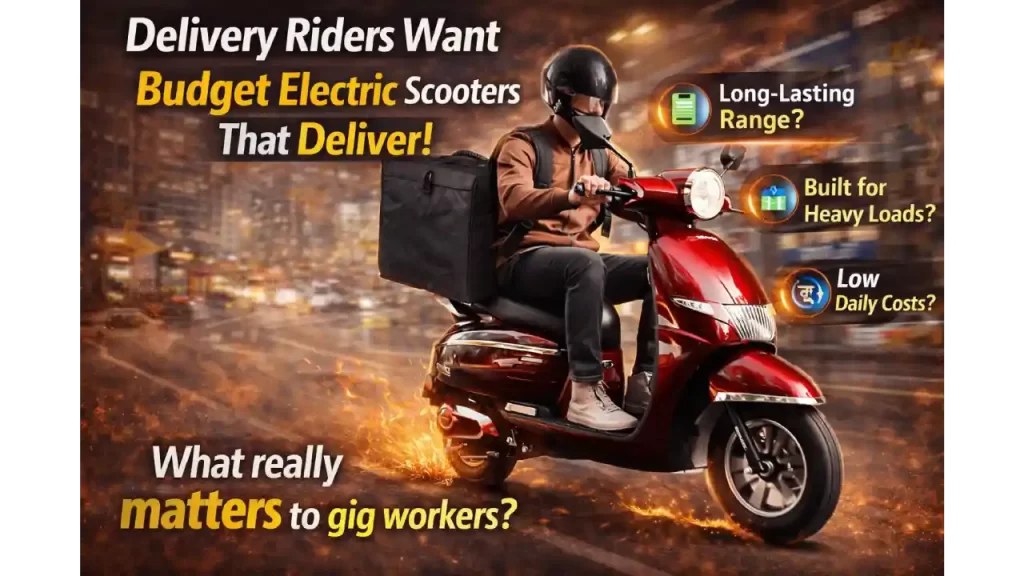

For delivery riders, a scooter isn’t a lifestyle choice. It’s a work partner.
As food delivery, quick commerce, and last-mile logistics expand, more riders are evaluating electric scooters—not for trends or tech bragging rights, but for daily earning reliability. The buying checklist looks very different when your income depends on every ride.
So what actually matters when delivery riders shop for a budget electric scooter?
Range That Survives a Full Shift
On paper, many scooters promise big numbers. On the road, riders ask a simpler question: Will it last my day?
Delivery work is stop-start, load-heavy, and time-bound. Riders value consistent real-world range over headline claims—enough to finish a shift without hunting for a charger. Anything that forces mid-day downtime is a deal-breaker.
Charging That Fits Work, Not the Other Way Around
Charging isn’t just about speed; it’s about flexibility.
Many riders don’t have dedicated parking or reliable public chargers. Budget scooters with simple home charging, or swappable batteries, earn attention because they reduce idle hours—time riders can’t afford to lose.
Built to Carry Weight—Every Day
Delivery scooters live harder lives.
Food bags, grocery crates, and parcels add constant load. Riders look for:
- A stable chassis
- Strong rear carriers
- Predictable braking under weight
Comfort matters too. Hours on uneven roads expose weak suspension quickly. A scooter that feels fine on a test ride but struggles under load won’t last a month in delivery work.
Torque Over Top Speed
In traffic, usable power beats high speed.
Delivery riders want smooth pickup, hill-climb confidence with cargo, and steady cruising—not racing numbers. A scooter that keeps momentum with a full bag reduces fatigue and missed deliveries.
Costs That Make the Math Work
Budget doesn’t just mean purchase price.
Riders calculate cost per day:
- Electricity vs petrol
- Service frequency
- Wear items
- Time lost to repairs
Lower running costs are the big draw—but only if reliability holds. Cheap upfront prices don’t help if downtime eats earnings.
Service Reach Equals Peace of Mind
After-sales support can decide a purchase.
Riders ask where the nearest service point is, how fast parts arrive, and what happens when warranties end. A wide, predictable service network often matters more than features.
Comfort for Long Hours
Delivery riding is physical work.
Seats, riding posture, heat management, and easy maneuverability in narrow lanes all add up. Scooters that reduce strain help riders stay productive through long shifts.
What This Tells Us About the Market
Delivery riders are practical adopters. They don’t chase hype. They test what works.
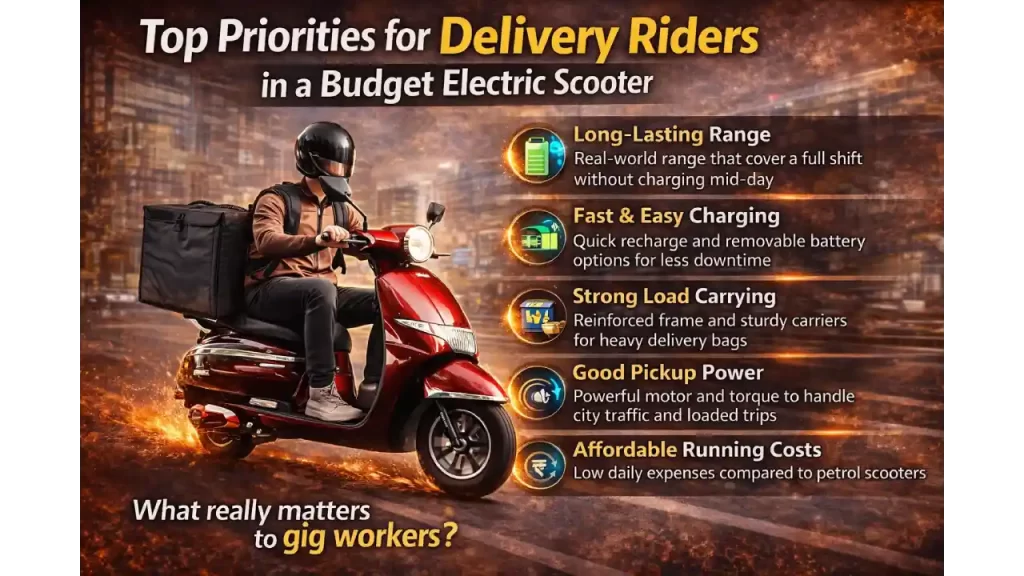
Their priorities—range realism, charging flexibility, load strength, torque, service reach, and daily economics—are shaping what “good value” means in electric mobility. As more scooters are designed around these needs, adoption won’t need convincing—it will happen by default.
Disclaimer:
This article is an editorial analysis based on observed rider behavior and industry trends. Individual requirements and experiences may vary by city, route, and workload.
👉 Looking for more EV scooter guides?
Visit our Homepage for the latest updates.