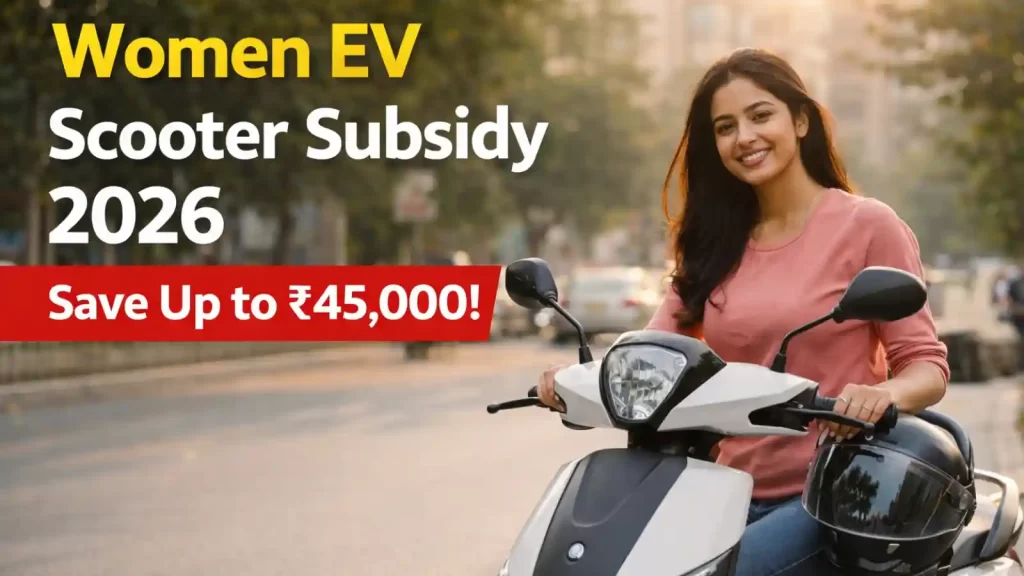

Women EV Scooter Subsidy 2026: A few years ago, buying an electric scooter felt like a big dream for many families—especially for girls and women who needed a daily ride for work, college or household errands. Petrol prices were rising every year and managing monthly travel expenses was becoming difficult. But 2026 brings a major change.
Now, with government support of up to ₹45,000, electric scooters are finally becoming affordable and practical for women. This is not just a discount. It is a message that women deserve safe, independent and budget-friendly mobility. For students, office workers and homemakers, an EV is turning into a smart choice—not just for money savings, but also for confidence and freedom.
Why the Government Is Supporting Women Riders
For a long time, electric vehicles grew slowly among women buyers. The main reasons were price and practicality. Surveys showed that women usually make short and regular city trips, like going to college, office, hospital, market, or kids’ school.
Electric scooters fit these needs perfectly—low running cost, silent ride and easy handling.
By reducing the price through subsidies, the government wants more women to choose EVs, which can reduce pollution in cities and support women’s mobility without increasing travel costs. Many experts say that affordable travel helps more women stay in jobs, because daily travel becomes less stressful and less expensive.
How Subsidies Changed Over Time
In the early days of EV policies, benefits were mostly linked to technology and battery size. There was no special push for women riders. But states like Delhi and Maharashtra tested extra support for women, and the results were positive.
Now in 2026, many states combine central subsidy + state subsidy, making electric scooters much cheaper than before.
For example, a scooter that once cost above ₹1,00,000 may now be ₹45,000 cheaper, making it closer in price to a petrol model. This price drop removes one of the biggest worries for women buyers.
Who Will Benefit the Most?
Women living in cities and towns who need a scooter every day will feel the biggest advantage.
This includes:
- college students
- nurses and healthcare workers
- delivery partners
- teachers
- shop owners and small business workers
- office employees
Along with the upfront subsidy, EVs save money in the long run—no petrol cost, fewer service expenses, and quieter rides. Over a few years, women can save tens of thousands of rupees, which helps in managing home budgets better.
Who Might Miss Out
The subsidy is helpful, but not everyone gets equal access yet.
Women in rural areas may struggle because charging points are fewer outside cities.
Some states also have income or residency conditions, so migrant workers or students staying away from home might not qualify.
Experts warn that without more charging stations and awareness, the benefit might stay limited to urban women. The goal is to make it equal for all, no matter where they live.
How the EV Industry Is Responding
Scooter companies are not sitting quietly—they are redesigning scooters to match women’s needs:
- lighter weight
- lower seat height
- better balance
- improved safety features
Dealers say they now get more test ride requests from women, especially after subsidy news spread online.
Some cities are already reporting women becoming nearly half of new EV test riders, showing a major shift in the market.
Petrol scooter makers are now under pressure, and many experts believe that if subsidies continue for a few more years, electric scooters will become the top choice for first-time women buyers.
Environment Benefits and Future Plans
Every electric scooter on the road means one less vehicle burning petrol—which means cleaner air and less noise.
When women start using EVs for daily travel, neighbourhoods become calmer and cleaner, and the positive effect spreads faster.
Looking ahead, there are talks of linking subsidies with training, so women who learn basic EV care and battery handling may get extra benefits.
If done well, this policy can become more than just a discount—it can be a step toward women’s empowerment, cleaner cities, and new job opportunities.
Conclusion
Women EV Scooter Subsidy 2026 is not just about saving money on a scooter—it is about giving women freedom, confidence, and mobility at a reasonable cost.
As charging networks expand and awareness improves, more women will be able to take advantage of this opportunity. The future of two-wheeler travel in India is quiet, clean and electric—and women are leading that change.
Disclaimer
Subsidy amounts and eligibility rules can change depending on the state and government updates. Readers should check official notifications or visit authorised EV dealers before purchasing.
👉 Looking for more EV scooter guides?
Visit our Homepage for the latest updates.