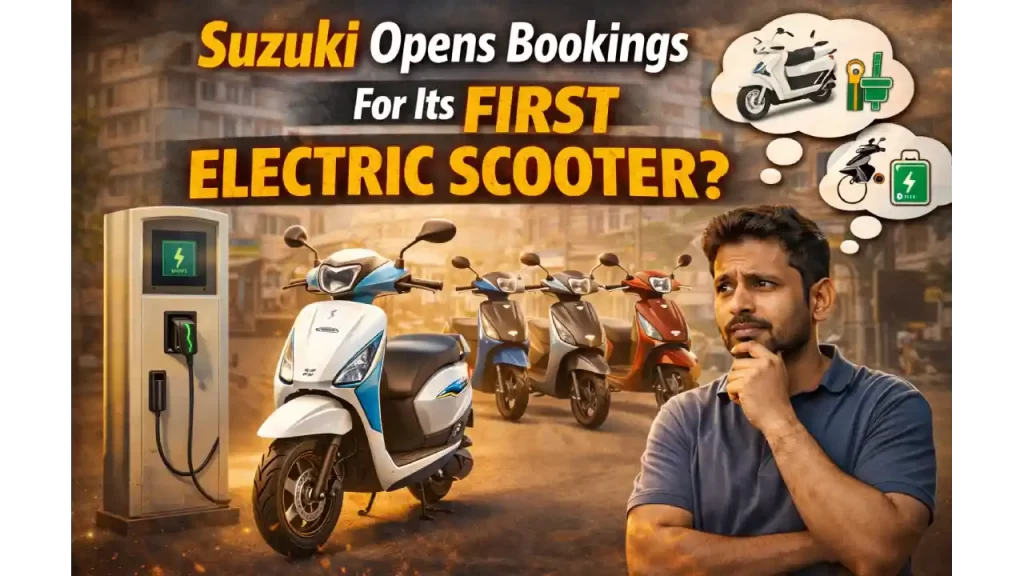

For years, Suzuki stayed on the sidelines while India’s electric scooter market evolved at high speed. Startups experimented, rivals rushed in, and cities quietly adjusted to plug-in mobility.
Now, that wait is over.
Suzuki Motorcycle India has officially opened bookings for its first electric scooter, marking a cautious but significant shift for a brand long associated with dependable petrol two-wheelers.
This isn’t just a new product announcement. It’s a signal — and a carefully timed one.
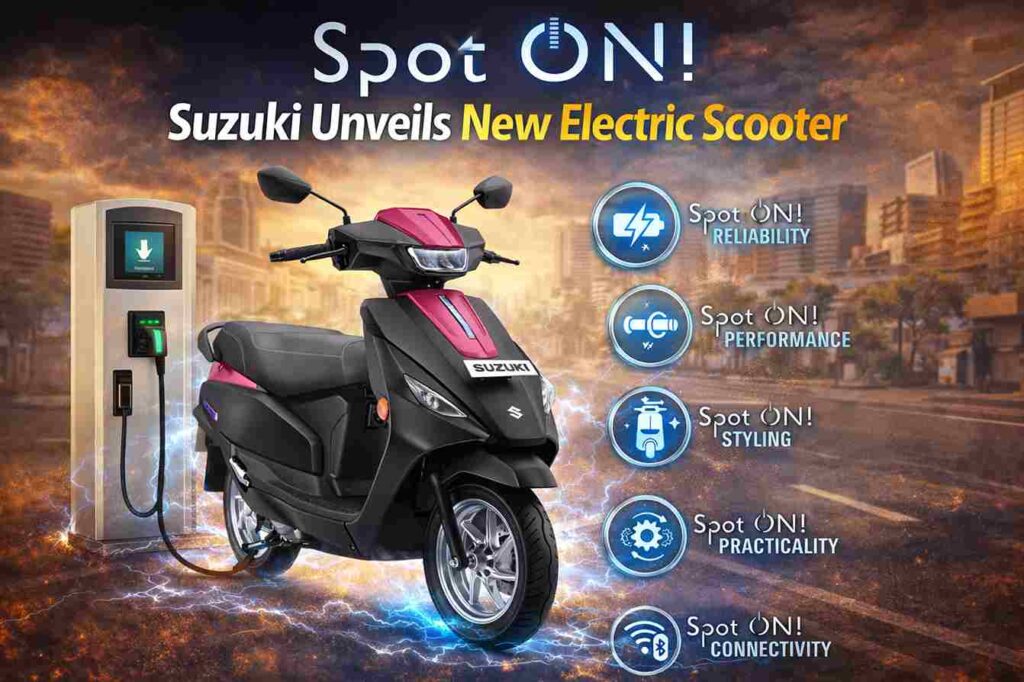
Why Suzuki’s EV Entry Feels Different
Suzuki’s move into electric mobility doesn’t come with loud claims or disruptive promises. Instead, it feels measured.
Unlike newer EV brands that built identity around electrification itself, Suzuki enters with something else: legacy trust. For many Indian riders, Suzuki represents reliability, long ownership cycles, and predictable servicing — values that matter even more in the EV transition.
Opening bookings first, before mass deliveries, suggests the company is prioritising controlled rollout over hype.
According to a report by Economic Times Auto, Suzuki Motorcycle India has opened bookings for its first electric scooter, marking the brand’s formal entry into the EV segment.
An Electric Scooter Built for Familiar Use
Rather than positioning its electric scooter as futuristic or radical, Suzuki appears to be anchoring it in everyday urban commuting.
The design language feels familiar. The intent seems clear: reduce friction for petrol scooter users thinking about their first electric switch. No drastic learning curve. No lifestyle messaging. Just an alternative that fits into existing routines.
This approach may not excite early adopters — but it could appeal strongly to practical buyers watching EVs from a distance.
Why the Timing Matters in 2026
India’s electric scooter market has entered a new phase.
Early adoption is done. The conversation has shifted from “Will EVs work?” to “Which ones feel dependable long-term?”
Suzuki’s booking announcement arrives at a moment when:
- Buyers are more informed (and more skeptical)
- Charging awareness is higher
- Price sensitivity is real, but trust matters more
- Brand backing is becoming a deciding factor
In that context, Suzuki’s entry isn’t late — it’s strategically timed.
What This Means for Everyday Buyers
For daily commuters, Suzuki’s electric scooter may represent something subtle but important: permission to switch.
Not everyone wants to experiment with new brands. Many riders wait for a familiar name to validate a new category. Suzuki doing so could unlock a segment of buyers who were curious but hesitant.
This is especially relevant in:
- Tier-2 cities
- Family households
- Riders upgrading from older petrol scooters
- Users who value service reach over features
Not a Disruption — A Transition
Suzuki’s first electric scooter doesn’t try to disrupt the market. It tries to normalise electric ownership.
And sometimes, that’s more powerful.
Instead of changing how people ride, Suzuki appears focused on changing how comfortable they feel with the idea of riding electric — quietly, steadily, without drama.
The Bigger Picture Going Forward
This booking announcement may be remembered less for specifications and more for what it represents.
When legacy manufacturers step into EVs cautiously, it often signals that electric mobility has moved from experiment to expectation.
Suzuki’s electric scooter may not redefine the segment overnight. But it could redefine who feels ready to enter it.
And in India’s EV story, that shift matters.
Disclaimer:
This article is an editorial analysis based on publicly available announcements and industry context. Final specifications, pricing, and delivery timelines may vary. Readers are advised to check official Suzuki channels or authorised dealerships for confirmed details.