
When I first started looking into a three wheel electric scooter in India, I wasn’t chasing trends or fancy features. I was genuinely frustrated. Indian roads are unpredictable, traffic feels exhausting, and parking is a daily headache. Every ride felt stressful, especially during peak hours.
I didn’t want something bulky like an electric auto, and at the same time, regular two-wheelers no longer felt safe or comfortable. That’s when I seriously started exploring three wheel electric scooters—not as a backup option, but as a real solution for daily mobility.
After talking to dealers, observing real riders, and comparing these vehicles with two-wheel EVs, I finally understood why this segment is growing so quickly in India. This article is my honest breakdown of what I learned, written like I’d explain it to a close friend.
What Is a Three Wheel Electric Scooter (And Why India Needs It)
A three wheel electric scooter is an electric vehicle designed with three contact points on the road instead of two. That one extra wheel completely changes how the scooter behaves, especially on Indian roads.
From broken patches and uneven speed breakers to sudden braking in traffic, stability quickly turns into safety. I’ve personally seen elderly riders regain confidence, delivery workers feel less tired, and small business owners move goods without fear of losing balance.
Unlike electric autos, these scooters are still compact. And unlike two-wheelers, they don’t demand constant balance control.
What makes them ideal for India:
- Compact size for narrow roads
- Easy to operate, even for beginners
- Affordable compared to larger EVs
- Perfect for short to mid-range daily use
Who a Three Wheel Electric Scooter Is Really For
Most brand websites say these scooters are “for everyone,” but I don’t fully agree. From what I’ve seen, they work best for certain groups who need comfort, safety, and reliability more than speed.
Senior Citizens
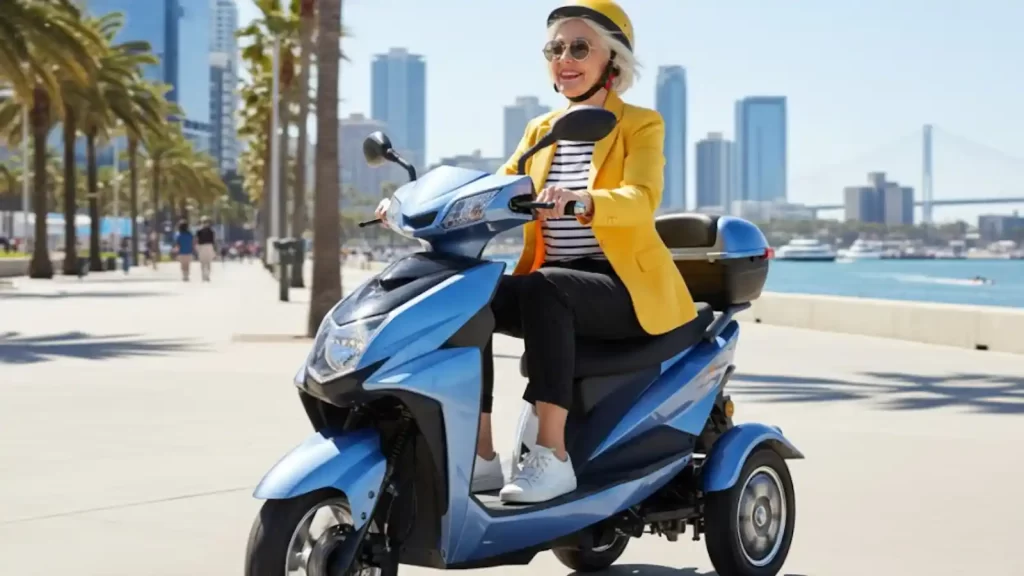
For seniors, safety matters more than anything else. Low-speed control, zero gear stress, and strong balance make three wheel electric scooters far less intimidating than motorcycles. I’ve watched elderly riders confidently ride to nearby markets without assistance.
Women Riders
Many women I spoke to shared the same concern—stability at traffic signals and slow speeds. Easy mounting, controlled braking, and reduced tipping risk make these scooters feel much safer for daily commuting.
Delivery and Last-Mile Workers
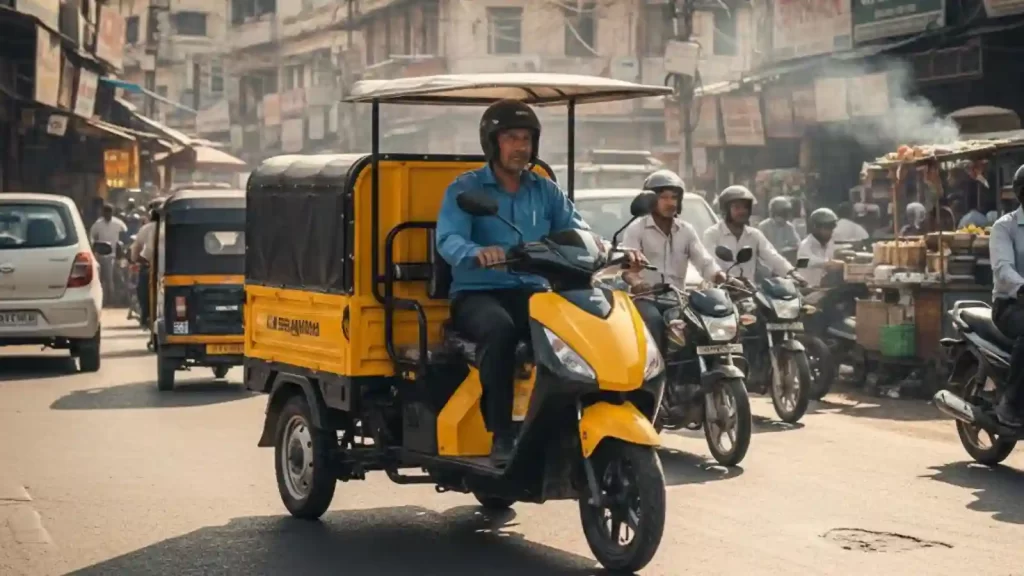
Food delivery riders and courier workers benefit hugely. Fuel costs drop to almost zero, and carrying delivery boxes doesn’t affect balance like it does on two-wheel scooters.
Street Vendors and Small Businesses
Fruit sellers, food carts, water tank carriers—this is where three wheel EVs quietly change livelihoods. Utility-focused models reduce effort, cost, and dependency on hired transport.
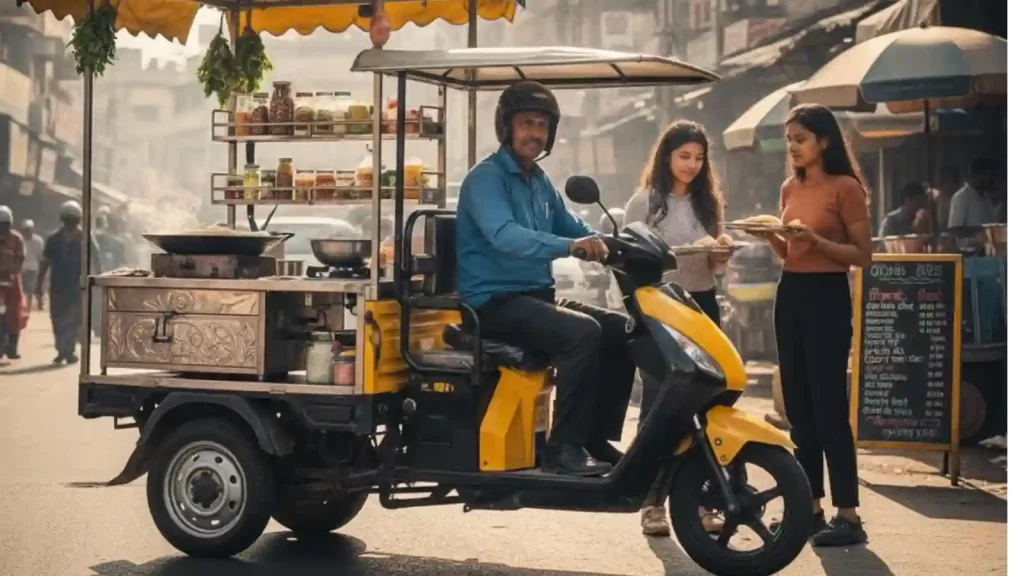
Why 3 Wheel Electric Scooters Are Safer Than Two-Wheelers
Safety isn’t marketing—it’s simple physics.
From what I’ve observed:
- Three wheels reduce the risk of tipping
- Braking feels more controlled
- Slow-speed wobbling is almost eliminated
- Carrying load doesn’t affect balance
This matters on Indian roads where:
- Speed breakers are uneven
- Roads are poorly lit
- Pedestrians and animals appear suddenly
A three wheel electric scooter doesn’t make you fearless—but it definitely makes riding calmer and more predictable.
Battery, Range, and Real-World Performance in India
This is where I learned not to trust brochure numbers blindly.
Most 3 wheel electric scooters in India come with:
- Lead-acid batteries (lower cost, heavier)
- Lithium-ion batteries (higher cost, better efficiency)
Realistic Expectations (Not Marketing Claims)
- Range: 70–120 km per charge
- Charging time: 4–8 hours
- Top speed: 25–45 km/h
In Indian traffic, speed matters less than consistency. Frequent stops, heat, and load mean real-world range is far more important than top speed.
Load Capacity and Utility Use (Where These Scooters Win)
This is where three wheel electric scooters clearly outperform standard electric bikes.
From what I’ve seen:
- Grocery transport feels effortless
- Delivery boxes stay stable
- No fear of imbalance under load
Many models support modifications for:
- Food carts
- Water tanks
- Ice boxes
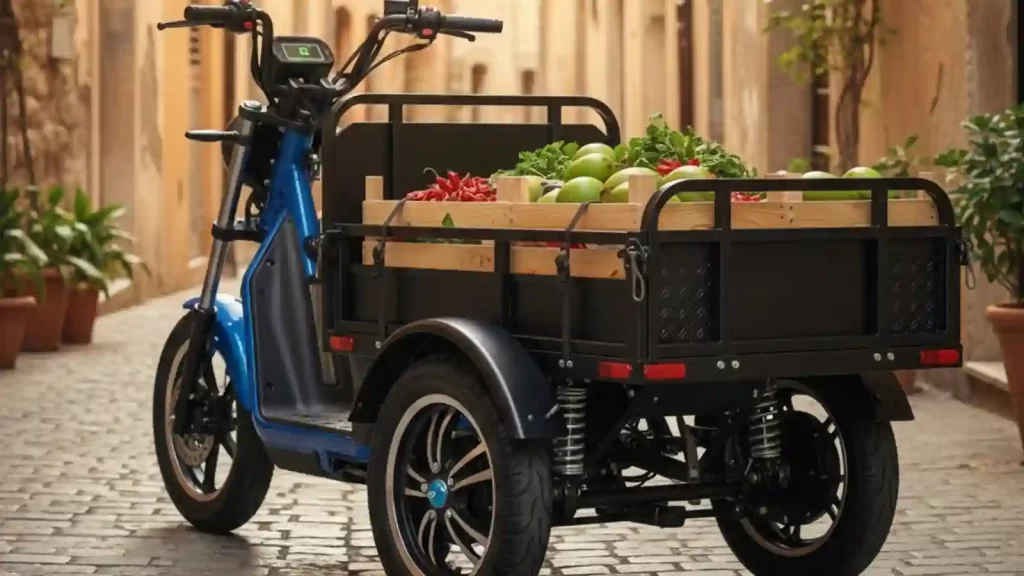
- Fruit and vegetable loads
Most competitor pages list this—but don’t explain why it matters. Utility is the real growth driver of this segment in India.
Cost of Ownership: Why They Make Financial Sense
This is the part that convinced me the most.
Here’s simple math:
- Electricity cost per km: ₹0.20–₹0.40
- Petrol scooter cost per km: ₹2.5–₹3.5
Maintenance is minimal:
- No engine oil
- Fewer moving parts
- Lower servicing cost
Over 3 to 5 years, a daily rider can easily save ₹1–2 lakh. For small business owners, that difference is huge.
Some well-known three wheel electric scooters in India include Mahindra Treo, Piaggio Ape Electric, Eko Tejas and Euler
Government Subsidies and EV Support in India
Depending on your state:
- EV purchase subsidies may apply
- Road tax exemptions are common
- Registration costs are usually lower
This reduces the upfront burden, especially for first-time EV buyers. I always recommend checking your state EV policy before buying.
Service Network and After-Sales Support (Don’t Ignore This)
This is where many buyers struggle later.
Before choosing any 3 wheel electric scooter, always check:
- Local service availability
- Spare parts access
- Warranty clarity
- Dealer responsiveness
A great product without service support quickly becomes a headache.
Three Wheel Electric Scooter vs Two-Wheeler EV
From my experience:
- Stability: Three wheel EV wins
- Load carrying: Three wheel EV wins
- Safety: Three wheel EV wins
- Speed and portability: Two-wheel EV wins
It’s not about which is better overall—it’s about what fits your daily needs.
Common Myths I’ve Seen People Believe
❌ “Only for elderly”
❌ “Too slow for daily use”
❌ “Not stylish”
In real life, practicality beats appearance—especially when safety or income is involved.
How I’d Choose the Right 3 Wheel Electric Scooter
If I were buying one today, I’d focus on:
- Battery type
- Load capacity
- Service network
- Warranty
- Intended use (personal or commercial)
Model names matter far less than real-world support.
Final Thoughts: Why This Segment Is Growing Fast in India
From what I’ve seen on the ground, three wheel electric scooters aren’t a trend—they’re a solution. They solve safety, cost, utility, and sustainability problems all at once.
If you’re looking for stress-free urban mobility, this category deserves serious attention. Take a test ride, ask about service, and choose what truly fits your daily life—not just what looks good on a brochure.
Frequently Asked Questions (FAQs)
What is a three wheel electric scooter?
A three wheel electric scooter is an electric vehicle with three wheels instead of two, designed to provide better balance, stability, and safety. It is especially suitable for Indian road conditions where uneven surfaces and heavy traffic are common.
Is a three wheel electric scooter safe for elderly riders?
Yes, it is one of the safest electric mobility options for elderly riders. The three-wheel design reduces the risk of falling, offers better control at low speeds, and makes starting and stopping much easier than a two-wheeler.
Can I use a three wheel electric scooter for daily commuting?
Yes. Three wheel electric scooters are ideal for short to medium-distance daily commuting in cities and towns. They are easy to ride, cost-effective, and well-suited for stop-and-go traffic.
Are three wheel electric scooters suitable for small businesses?
Yes. Many three wheel electric scooters are designed for utility and commercial use. They are commonly used by street vendors, delivery workers, and small business owners to transport goods efficiently at a low operating cost.
What is the average range of a three wheel electric scooter?
In real Indian road conditions, most three wheel electric scooters offer a range of approximately 70 to 120 kilometers on a full charge, depending on battery type, load, and riding style.
How long does it take to charge a three wheel electric scooter?
Charging usually takes between 4 to 8 hours, depending on the battery type and charger used. Lithium-ion batteries generally charge faster than lead-acid batteries.
Do three wheel electric scooters require registration in India?
Yes, most three wheel electric scooters require registration and number plates. However, registration costs are typically lower than petrol vehicles, and some states offer additional EV benefits.
Are government subsidies available for three wheel electric scooters?
Government subsidies may be available depending on state EV policies. These subsidies can reduce the purchase cost and make electric scooters more affordable for personal and commercial users.
What maintenance is required for a three wheel electric scooter?
Maintenance is minimal compared to petrol vehicles. There is no engine oil, fewer moving parts, and lower servicing costs. Regular checks include brakes, tires, and battery health.
How long does the battery last in a three wheel electric scooter?
Battery life typically ranges from 2 to 4 years, depending on usage, charging habits, and whether the battery is lead-acid or lithium-ion.
👉 Looking for more EV scooter guides?
Visit our Homepage for the latest updates.