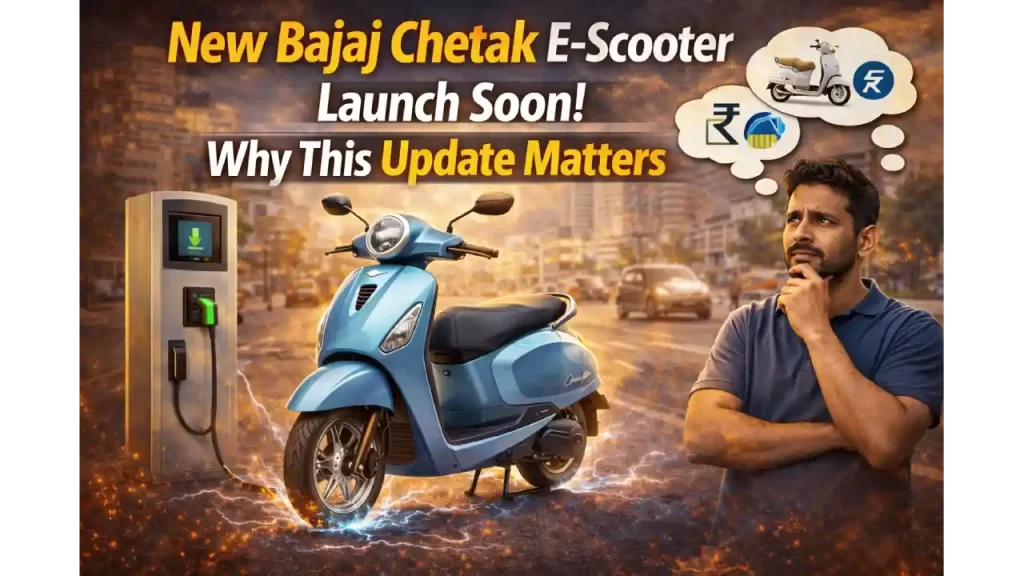

For many Indians, the name Chetak isn’t just a scooter — it’s a memory.
It stood for reliability, quiet confidence, and everyday mobility long before “electric” entered the conversation. Now, Bajaj is preparing to introduce a new Chetak electric scooter, and this time, the move feels less symbolic and more strategic.
This isn’t about nostalgia.
It’s about where electric mobility in India is headed next.
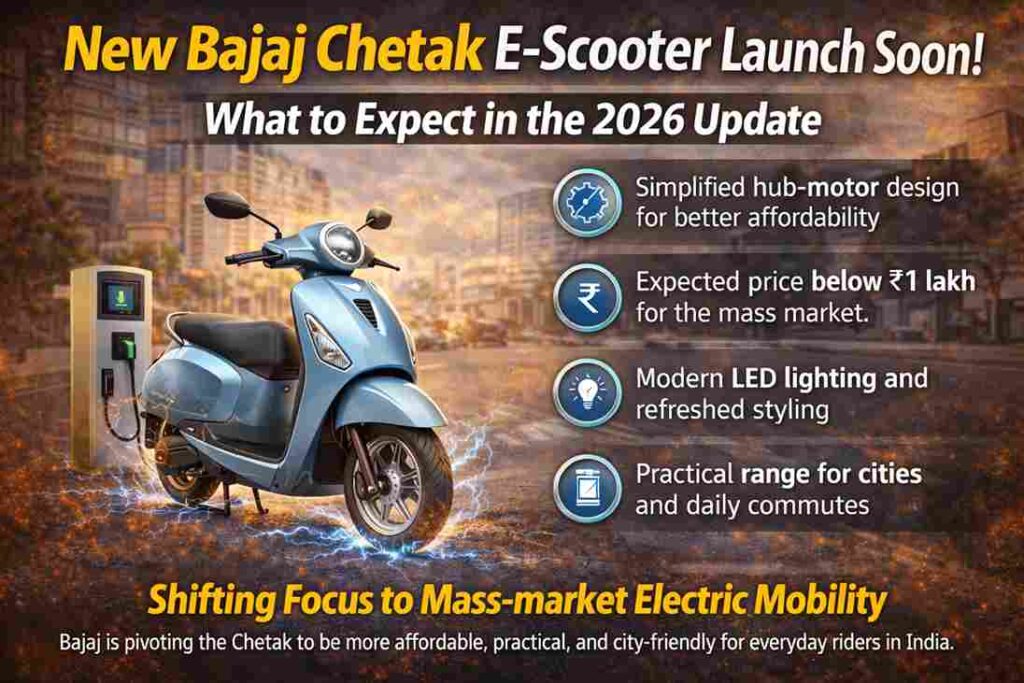
Why Bajaj Is Updating the Chetak Again
When Bajaj first brought back the Chetak as an electric scooter, it arrived as a premium product — solid, well-built, and urban-focused. But over time, the market changed.
Electric scooters are no longer early-adopter products. They’re daily commuters. And in that shift, price sensitivity, practicality, and trust matter more than novelty.
The upcoming Chetak update appears to respond to exactly that reality.
A Launch That Signals a Strategic Shift
While official specifications are still under wraps, what’s becoming clear is Bajaj’s intent.
The new Chetak is expected to:
- Broaden its appeal beyond premium buyers
- Focus more on daily usability than lifestyle positioning
- Strengthen Bajaj’s presence in a fast-crowding EV segment
This suggests Bajaj isn’t chasing headlines — it’s chasing volume and longevity.
What Everyday Riders Are Likely to Notice
For daily commuters, electric scooters succeed or fail on small things:
- How predictable they feel
- How easy they are to live with
- Whether ownership feels stress-free
The next Chetak seems designed with these questions in mind. Rather than dramatic design changes or feature overload, expectations point toward incremental improvements — the kind that don’t excite spec sheets but matter over years of use.
That’s a very Bajaj approach.
Why Timing Is Everything
The electric scooter market in India has reached an interesting moment.
Early excitement has settled. Buyers now compare:
- Running costs
- Service networks
- Brand reliability
- Long-term ownership comfort
This is where established manufacturers like Bajaj gain an edge. And by refreshing the Chetak now, the company positions itself not as a disruptor — but as a stabiliser in a noisy market.
This Isn’t Just a Product Update
What makes this launch interesting isn’t what’s changing — it’s what isn’t.
Bajaj isn’t trying to redefine electric scooters overnight. Instead, it appears focused on making the idea of electric mobility feel less experimental and more routine.
For many Indian households, that reassurance matters more than range figures or app features.
The Bigger Picture for Indian EVs
Electric scooters are quietly becoming the default second vehicle — and in some cases, the primary one. But mass adoption doesn’t happen through disruption alone. It happens when trusted names remove doubt.
The updated Chetak could play that role.
Not by being the loudest.
But by being familiar, dependable, and quietly improved.
What to Watch Next
As the official launch nears, attention will shift to:
- Where the new Chetak is positioned on pricing
- How Bajaj balances features with cost
- How quickly it scales availability beyond big cities
Those answers will determine whether this launch is just an update — or a turning point.
Disclaimer:
This article is an editorial analysis based on industry trends and early reports. Final specifications, pricing, and availability may vary. Readers should rely on official Bajaj announcements for confirmed details.